1. SYSTEM SPECS: Reproductive Anatomy
Goal: Understand the main parts of the male & female reproductive systems.
The human reproductive system is a complex network of internal and external organs that work together for the purpose of procreating (creating new life). While both the male and female systems are designed to produce specialized cells (gametes) that carry genetic information, their specific roles, structures, and functions are very different.
The Male Reproductive System
The primary goals of the male reproductive system are to produce, maintain, and transport sperm (the male gamete) and protective fluid (semen), and to deliver the sperm into the female reproductive tract. Most of the male reproductive system is located outside the body.
The Female Reproductive System
The primary goals of the female reproductive system are to produce egg cells (ova), provide a specialized location where a sperm and egg can meet for fertilization, and protect and nourish a developing fetus for nine months until birth. Most of the female reproductive system is located internally within the pelvic cavity.


2. DATA SHUFFLING: Meiosis vs Mitosis
Goal: Understand how cells divide and why DNA shuffling matters.
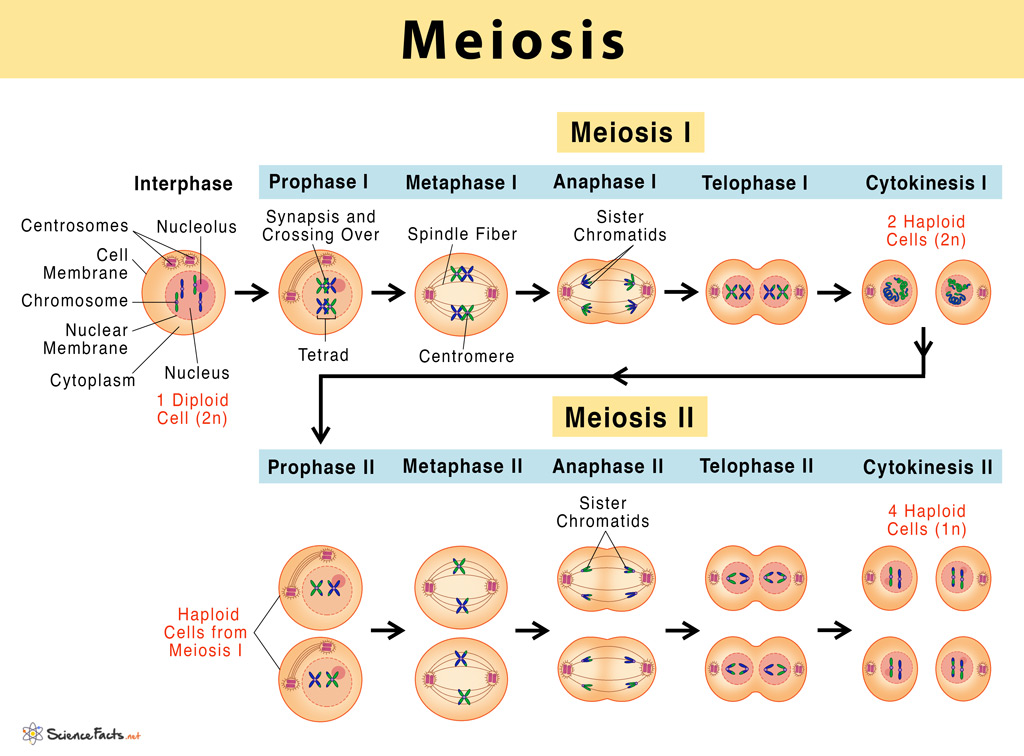
Mitosis and Meiosis are the two fundamental ways that cells divide and replicate. Without them, life as we know it simply could not exist. We can think of them as two different manufacturing processes where one is for mass producing identical replacement parts, and the other is for designing unique, specialized blueprints for the next generation.
The Importance of Mitosis (The Builder & Healer)
Mitosis is the standard division process for almost every single cell in your body (skin, muscle, bone, etc.). It creates two identical clones of the original cell.
- Growth and Development: You started as a single fertilized egg cell. Through millions of rounds of mitosis, that single cell multiplied to build the trillions of cells that make up your body today.
- Healing and Repair: When you scrape your knee, break a bone, or undergo surgery, mitosis kicks into overdrive. The surviving cells nearby divide to create new tissue, physically patching the wound with identical skin or bone cells.
- Constant Replacement: Your body goes through extreme wear and tear. You shed thousands of dead skin cells every minute, and your red blood cells only live for about 120 days. Mitosis ensures there is a constant supply of fresh, identical replacements ready to take over.
The Importance of Meiosis (The Genetic Shuffler)
Meiosis happens exclusively in the reproductive organs (testes and ovaries) to create sperm and egg cells. It divides the genetic material in half.
- Maintaining Chromosome Counts: A human needs exactly 46 chromosomes to survive. If regular body cells (which have 46) combined to make a baby, the baby would have 92 chromosomes, which is fatal. Meiosis purposefully cuts the DNA in half (2n → n) so the sperm (23) and the egg (23) perfectly add up to a healthy 46.
- Creating Genetic Diversity: During Meiosis, the cell deliberately swaps and shuffles pieces of the parents' DNA (Crossing Over). This means every single sperm and egg is 100% unique. This is why you look different from your siblings, even though you share the same parents.
- Species Survival: Genetic diversity is the ultimate defense mechanism. If a massive virus attacks a population, and everyone has the exact same DNA (like clones), the entire species could be wiped out. Because Meiosis shuffles our DNA, some individuals will naturally have a genetic resistance to the virus, ensuring the human race survives.
KEY DIFFERENCES
- Mitosis (Body Growth): Divides once. Makes 2 identical cells (2n → 2n) for growth & repair. DNA is copied exactly; no mixing.
- Meiosis (Reproduction): Divides twice (2n → n). Makes 4 unique sperm/egg cells with half DNA.
- Crossing Over (Prophase I): Homologous chromosomes pair up and swap segments → unique gene combos.
- Anaphase I vs II: In Anaphase I, whole pairs separate; sister chromatids separate only in Anaphase II.
🧬 Chromosome Segment Swap (Crossing Over)
MEIOSIS PATHWAY
Meiosis makes sperm/egg cells. It halves the DNA (2n → n) and uses Crossing Over to mix genes.
🧬 Why can it shuffle? Homologous chromosomes pair up in Prophase I, allowing physical exchange. Mitosis lacks this pairing.
3. CYCLE DASHBOARD: Female Hormones
Goal: Track how hormones control the 28‑day menstrual cycle, ovulation, and the uterus lining.
PHASES OF THE MENSTRUAL CYCLE
1. The Menstrual Phase (Days 1–5)
What it is: This is the part of the cycle commonly called the "period."
What is happening: If an egg was not fertilized during the previous cycle, the body realizes it doesn't need the thick, blood-rich lining it built in the uterus. The uterus contracts to shed this old lining, which leaves the body as bleeding.
Hormone status: Estrogen and Progesterone drop to their lowest levels.
2. The Follicular Phase (Days 1–13)
(Note: This phase actually starts on Day 1, overlapping with menstruation, but continues after bleeding stops).
What it is: The "egg growing" and "rebuilding" phase.
What is happening: The brain sends a signal to the ovaries to start preparing a new batch of eggs. These eggs grow inside little sacs called follicles. As the largest, healthiest egg grows, it acts like a hormone factory, pumping out Estrogen. This Estrogen tells the uterus to start building a fresh, thick, nutrient-rich lining for a potential baby.
Hormone status: FSH (Follicle-Stimulating Hormone) is released to grow the egg. Estrogen levels rise steadily as the egg gets bigger.
3. Ovulation (Day 14)
What it is: The main event—the release of the egg.
What is happening: The egg is finally mature. The high levels of Estrogen from the growing egg trigger the brain to release a sudden, massive burst of a new hormone. This burst acts as a "launch command," causing the ovary to rupture the follicle and push the mature egg out into the Fallopian tube.
Hormone status: A massive, sudden spike in LH (Luteinizing Hormone) causes the egg to pop out.
4. The Luteal Phase (Days 15–28)
What it is: The "waiting and maintaining" phase.
What is happening: After the egg leaves the ovary, the empty shell it left behind (now called the Corpus Luteum) has a new job: keeping the uterus safe. It pumps out large amounts of Progesterone, which acts like glue, keeping the thick uterus lining stable and healthy just in case the egg gets fertilized by a sperm.
Hormone status: Progesterone is extremely high. Estrogen remains moderate.
How it ends (The Reset):
- If a sperm fertilizes the egg: The embryo implants in the uterus, and hormone levels stay high to protect the baby (no period).
- If no sperm arrives: The empty egg shell (Corpus Luteum) shrinks and dies. Progesterone levels crash. Without Progesterone holding it together, the uterus lining starts to break down, and the body loops right back to Phase 1: Menstruation.
HORMONE ROLES
- FSH (Follicle-Stimulating Hormone) – tells the ovary to start growing an egg.
- Estrogen – rebuilds and thickens the uterus lining.
- LH (Luteinizing Hormone) – a sudden spike triggers ovulation (egg release).
- Progesterone – maintains the thick uterus lining, keeping it ready for a fertilized egg.
Menstrual Cycle Overview

4. SYSTEM FIXES: IVF Technology
Goal: Understand how In‑Vitro Fertilization helps overcome reproductive problems.
HOW IVF BYPASSES PROBLEMS
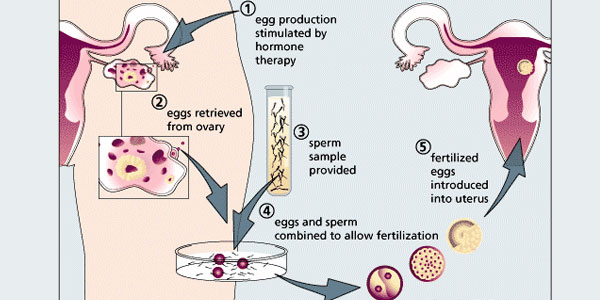
In‑Vitro Fertilization (IVF) is used when natural pregnancy fails. For example, blocked fallopian tubes prevent sperm from meeting the egg. IVF takes the egg and sperm, combines them in a lab dish, and then transfers the resulting embryo directly into the uterus.
REAL LIFE PROBLEMS THAT NEED IVF
1. Fallopian Tube Damage or Blockage
The Problem: The Fallopian tubes are the "highways" where the sperm meets the egg. If they are blocked, scarred, or damaged (often due to pelvic inflammatory disease or prior surgeries), sperm cannot reach the egg, and a fertilized egg cannot travel to the uterus.
How IVF Helps? IVF completely bypasses the Fallopian tubes. The egg is retrieved directly from the ovary, fertilized in a lab, and the resulting embryo is placed directly into the uterus.
2. Male Factor Infertility
The Problem: The male partner may produce too few sperm (low sperm count), sperm that don't swim properly (poor motility), or sperm with an abnormal shape (poor morphology), making it difficult for them to penetrate and fertilize the egg naturally.
How IVF Helps? In the lab, sperm can be concentrated and placed directly next to the egg. In severe cases, a specialized IVF procedure called ICSI (Intracytoplasmic Sperm Injection) is used, where a single healthy sperm is injected directly into the center of the egg.
3. Ovulation Disorders
The Problem: Conditions like Polycystic Ovary Syndrome (PCOS) or premature ovarian failure cause irregular or absent ovulation. If eggs are rarely or never released, fertilization cannot happen.
How IVF Helps? IVF uses targeted hormone medications (like the FSH and LH you mapped out in your cycle dashboard) to carefully stimulate the ovaries to produce and mature multiple eggs at once, which are then surgically retrieved.
4. Endometriosis
The Problem: This occurs when tissue similar to the lining of the uterus grows outside of it. This rogue tissue can irritate organs, create scar tissue, and physically block the ovaries or Fallopian tubes, or create a toxic inflammatory environment for eggs and sperm.
How IVF Helps? By removing the eggs and fertilizing them in a controlled, safe laboratory environment (the "petri dish"), IVF avoids the hostile environment created by the endometriosis.
5. Genetic Disorders
The Problem: If one or both partners carry a severe inherited genetic disease (like Cystic Fibrosis or Huntington's disease), they risk passing it to their child through natural conception.
How IVF Helps? IVF allows for Preimplantation Genetic Testing (PGT). After the eggs are fertilized and grow into early embryos in the lab, a few cells are tested for genetic defects. Only the healthy embryos are selected for transfer to the uterus.
6. Fertility Preservation (Cancer Treatment)
The Problem: Life-saving medical treatments like chemotherapy or radiation can permanently damage eggs or sperm, leaving a person infertile.
How IVF Helps? Before starting cancer treatment, a patient can undergo the first half of the IVF process to retrieve eggs or sperm and freeze them. Years later, those frozen gametes can be thawed and used in an IVF cycle to achieve pregnancy.
7. Unexplained Infertility
The Problem: Sometimes, despite comprehensive testing on both partners (normal sperm, clear tubes, regular ovulation), a cause for infertility simply cannot be found, yet natural conception still fails.
How IVF Helps? IVF removes the guesswork by controlling every step of the fertilization and early embryo development process, significantly increasing the chances of a successful pregnancy.
How IVF Works (Step-by-Step)
LAB BENCH SIMULATOR
DIAGNOSTIC DASHBOARD
Test your knowledge. Choose a section below to answer 5 questions.